Ujjaini sev vs Ratlami-style sev: the difference
· 5 min read
Ask for "sev" in Madhya Pradesh and the next question is always "which one?" Two towns an hour apart from each other give the region its two best-known answers: Ujjaini sev, the everyday namkeen of Ujjain, and Ratlami-style sev, the clove-and-pepper kind made in the Ratlam tradition.
The short version: both are besan sev, both come from the Malwa region, and both end up on poha, chaat and tea trays. Ujjaini sev is the gentler one that fits into everything; Ratlami-style sev is the spicier one that stands on its own. This guide explains what each is, how they differ, and how to use them.
Two sevs, one region
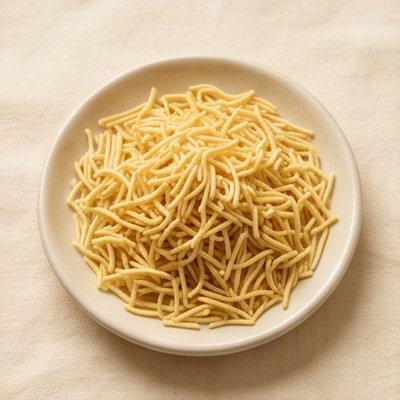
Sev is the crunchy thread of Malwa's food culture. It is made from besan (gram flour) dough, pressed into thin strands and fried until crisp. Across the region it is less a snack than an ingredient: scattered over poha, folded into bhel, layered on chaat, stirred into a weeknight sev-tamatar sabzi, and eaten by the handful with evening tea.
Ujjain sits about an hour from Indore, and Ratlam is the other Malwa town whose sev people name. Each has its own way of seasoning the same dough, and that is where the difference begins.
What Ujjaini sev is like
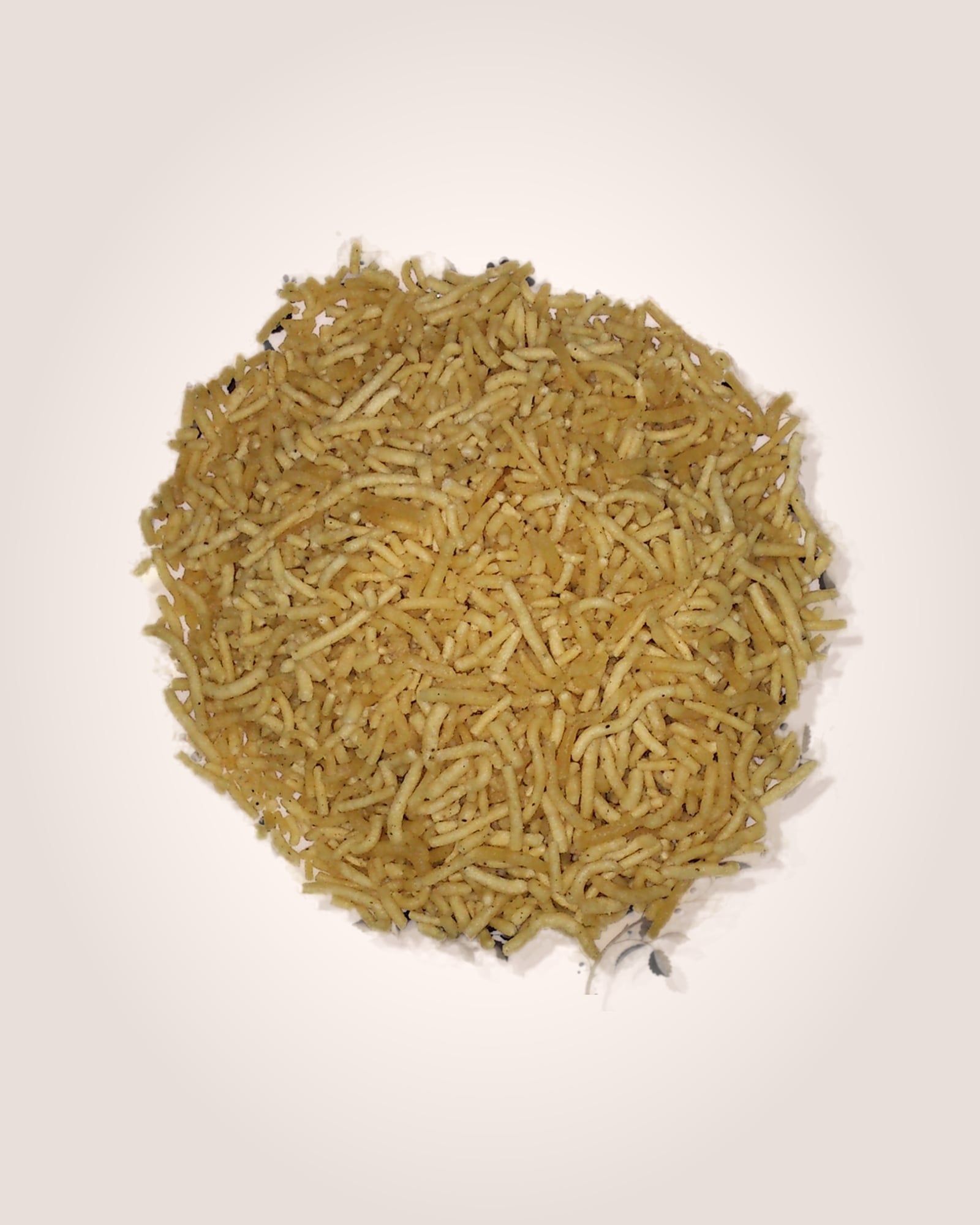
Ujjaini sev (उज्जैनी सेव), sometimes just called Ujjain sev, is the style associated with Ujjain's sweet-and-namkeen shops. The dough and the frying are the same as elsewhere in Malwa; what makes it Ujjaini is the seasoning the local shops have made their own.
It is the sev many families reach for every day. It works on its own with chai, but it also disappears into poha, chaat and sabzi without overpowering them. Styles differ from shop to shop, some thicker, some finer, some spicier, which is part of the fun of the Malwa sev map. Visitors to Ujjain often carry a few packs home, and that is how the style has travelled across the country.
What Ratlami-style sev is like
Ratlami-style sev (रतलामी सेव) is the one people name when they want spice. It is traditionally seasoned with warm, pungent spices; clove and black pepper are the flavours most people associate with it. The heat builds slowly rather than hitting all at once, and the crunch is firm.
Most packaged sev sold nationally is mild and uniform. The Ratlam tradition is spicier and more assertive, which is exactly why people who grew up in Madhya Pradesh and now live elsewhere find it one of the hardest flavours to replace.
A note on the name. Ratlami sev received a Geographical Indication (GI) tag in 2014, tying the name to producers in the Ratlam region. The sev Gathri picks comes from Indore sellers and is made in the Ratlam tradition, so we call it Ratlami-style. We would rather be precise about origin than borrow a protected name.
Ujjaini sev vs Ratlami-style sev at a glance
- Where the style comes from: Ujjain for Ujjaini sev; Ratlam for Ratlami-style sev.
- Base: both are besan sev, thin strands, fried crisp.
- Seasoning: Ujjaini sev is seasoned the way Ujjain's shops have made their own; Ratlami-style sev leans on warm, pungent spices such as clove and black pepper.
- Heat: Ujjaini sev sits quietly inside a dish; Ratlami-style sev has a slow-building, peppery heat.
- Best role: Ujjaini sev is the everyday, goes-with-everything namkeen; Ratlami-style sev is the one you notice.
- Varies by maker: both do. Two shops rarely make them the same way, so the ingredients on the seller's pack are the final word.
Which one should you pick?
Pick Ujjaini sev when the sev is a supporting act: over poha or usal, on top of chaat, mixed into bhel, or stirred into a sev-tamatar sabzi where you want crunch without extra heat. It is also the safer bowl to put out for guests with mixed spice tolerance.
Pick Ratlami-style sev when you want the sev to lead: by the handful with evening tea, as the crunchy top layer on dahi puri or chaat, or scattered over plain poha to wake it up.
The honest answer is both. Having them side by side is the easiest way to taste how much one snack can vary within a single region, which is why the Namkeen Gathri packs the two together. Two neighbouring towns, two sev styles, one parcel.
Keeping sev crisp
Sev keeps its crunch well if you treat it right. Close the pack tightly after opening, and store it somewhere cool and dry, away from heat and humidity. If you have moved some into a jar, keep the lid on between servings. The shelf life printed on the seller's pack is the one to trust.
Getting Malwa sev outside Madhya Pradesh
The sev in most supermarket snack aisles outside Madhya Pradesh is not the Malwa kind. Gathri picks Ujjaini sev and Ratlami-style sev from Indore sellers, keeps each in the seller's original pack, and ships them inside a Gathri outer pack stamped with the Indore Place Stamp. The pack label carries the seller's details and ingredients, so you always know exactly what you are eating.
Order by 6 pm IST and we pick your items from Indore's shops the next morning and dispatch them the same day. Most cities get it in 2–4 working days after dispatch; smaller towns can take up to 7.
Read more on our Ujjaini sev and Ratlami-style sev pages, or pick both up in one of these Gathris: