What is jeeravan? The spice mix behind Indore's poha
· 5 min read
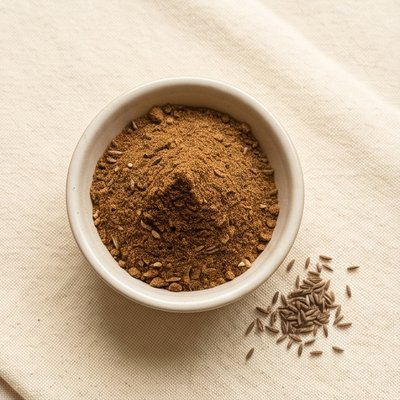
If you have eaten poha in Indore, you have eaten jeeravan — even if nobody told you its name. It is the reddish-brown dust shaken over the plate just before it is handed across the counter, and it is the reason Indori poha tastes like Indori poha and not like poha from anywhere else.
This guide explains what jeeravan (जीरावन) is, how it differs from the spice mixes you may already have at home, and how to use it well beyond breakfast.
What jeeravan is
Jeeravan is a dry finishing spice mix from Indore. The name comes from jeera — cumin — and roasted cumin sits at the heart of most recipes. Around it, makers balance tangy, salty and gently hot notes so the mix wakes up whatever it lands on without taking over.
The key word is finishing. Jeeravan is not a cooking masala that goes into hot oil at the start. It goes on at the end, straight onto the food, the way you would use salt and pepper at the table.
There is no single official recipe. Every Indore spice shop and every family has its own balance — some sharper, some more aromatic, some with more heat. That variety is part of the charm, and it is why the exact ingredients of any jeeravan are printed on its maker's pack.
Why it belongs to Indore
Indore's food identity is built around its street mornings. Across the city, poha is steamed in wide pans and served with sev, onion, a squeeze of lime, sometimes pomegranate — and a pinch of jeeravan that ties the sweet, sour and savoury together. Many people pair it with hot jalebi, and the tang of the jeeravan is what keeps that pairing from feeling heavy.
Because it lives on the breakfast plate, jeeravan became an everyday spice in Indori homes rather than a special-occasion one. Families who move away from Indore often find it is one of the flavours they miss most — and one of the hardest to replace.
Jeeravan vs chaat masala
People outside Indore often assume jeeravan is just another name for chaat masala. It isn't.
- Chaat masala is usually built to be sharp and sour, designed for chaat, fruit and street snacks.
- Jeeravan is cumin-forward and rounder, designed first for poha, with the tang playing a supporting role.
You can sprinkle either on cut fruit, but swap them on poha and anyone from Indore will notice straight away.
Seven ways to use jeeravan
Once you have a pack, you will reach for it far more often than you expect.
- Poha — the classic. Add a pinch right before serving, not while cooking.
- Cut fruit — guava, apple, papaya or watermelon with a light dusting.
- Chaas (buttermilk) — stir a pinch into chilled buttermilk for a street-side flavour.
- Salads — onion, tomato and cucumber with lime and jeeravan.
- Sprouts and chana — a quick, filling snack with a squeeze of lemon.
- Makhana or corn — toss roasted makhana or boiled corn with a little ghee and jeeravan.
- Chaat and bhel — use it alongside, or instead of, your usual finishing masala.
A little goes a long way. Start with a pinch, taste, then add more.
Storing jeeravan
Treat it like any ground spice: keep the pack sealed, store it somewhere cool and dry, and away from the stove's heat. Moving a small amount into a jar you keep near the dining table makes it an everyday habit.
Getting real Indori jeeravan outside Indore
The jeeravan found in supermarket spice aisles outside Madhya Pradesh is rarely the local, shop-made kind. Gathri picks jeeravan from Indore sellers, keeps it in the seller's original pack, and ships it inside a Gathri outer pack stamped with the Indore Place Stamp — so what reaches you is the same jeeravan Indore buys for itself.
Read more about it on our Indori jeeravan page, or pick it up in one of these Gathris: